RSMS
Full-Stack Asset & Work Order Management Platform
An end-to-end industrial asset management system built across three coordinated services — a .NET backend, an Angular frontend, and a Java integration layer — that digitizes equipment tracking, work orders, and shop-floor telemetry that were previously handled through paper logs and spreadsheets.
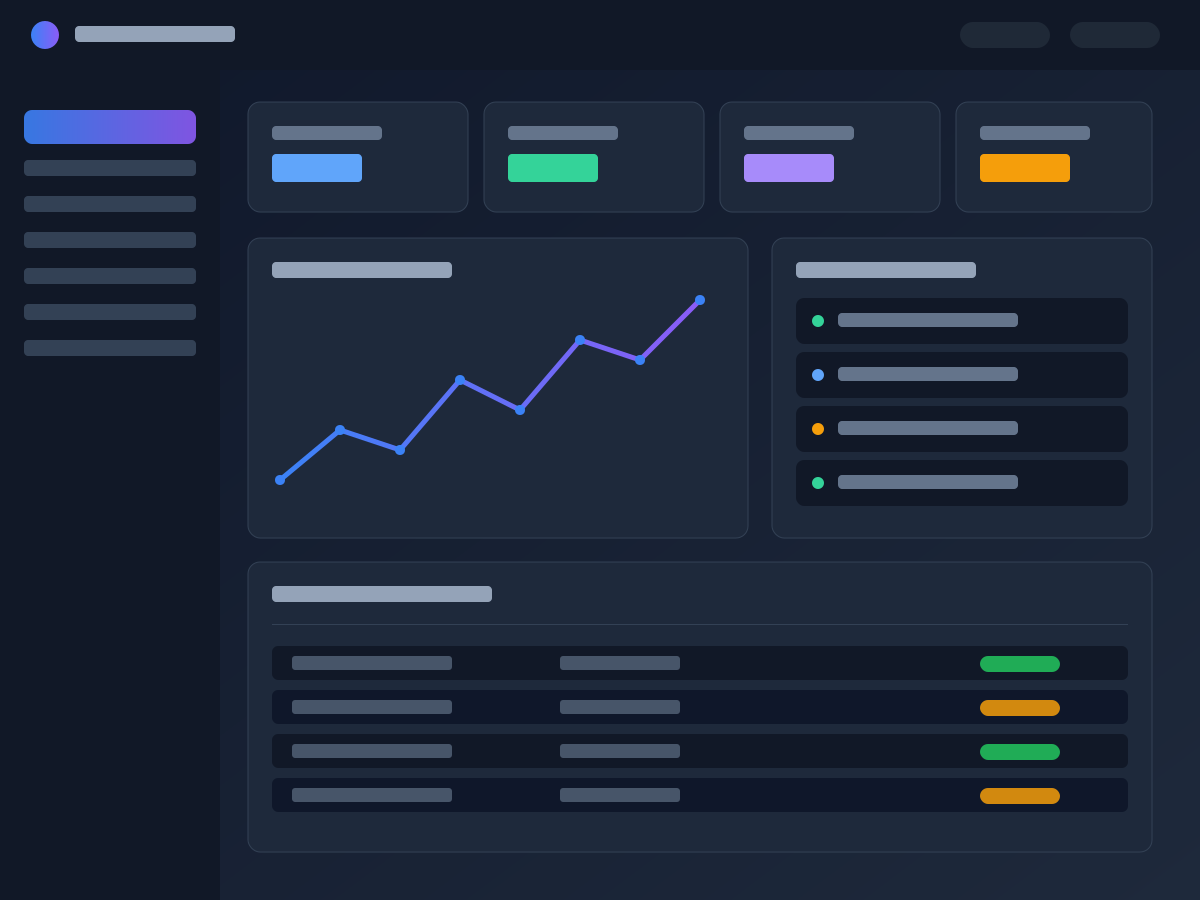
Key Metrics
Independent backend, frontend, and integration services
Near real-time sync from shop-floor systems
Eliminated manual log books and spreadsheets
Use Cases
Automated Data Integration
Scheduled services poll upstream process-control databases and automatically ingest equipment preparation and production records, removing the need for manual data entry between shop-floor systems and the central platform.
Real-Time Equipment Telemetry
Sensor and machine telemetry is captured via an MQTT bridge and relayed into the platform in near real-time, giving teams live visibility into equipment condition without waiting for shift-end reports.
Work Order & Asset Lifecycle Tracking
A unified portal manages asset inventory, work orders, checklists, and location tracing across the full lifecycle of critical equipment, replacing disconnected spreadsheets with a single source of truth.
Role-Based Multi-Team Access
Operators, maintenance engineers, and plant managers each get tailored views and permissions, with full audit trails and centralized reporting across incident management and shift log books.
Architecture Overview
Service-Oriented Backend (.NET)
The core API is built on ASP.NET Core with a clean separation between read (query) and write (command) services for each business domain, making the codebase easier to extend, test, and optimize independently as it grows.
Dedicated Integration Layer
A separate Java service handles all upstream data-source connections and scheduled polling jobs, isolating fragile external integrations from the core application and allowing each data source to be managed independently.
Real-Time Updates via SignalR
The Angular frontend receives live push notifications for incoming data and status changes, so users see up-to-date information without needing to refresh or poll the server themselves.
Layered Authentication & Authorization
Short-lived JWT access tokens with refresh-token rotation secure user sessions, while service-to-service calls are additionally protected with dedicated API keys — providing defense in depth across the platform.
Event-Driven Telemetry Bridge
An MQTT-based bridge decouples raw equipment telemetry protocols from the application's data model, so new sensor sources can be onboarded without reworking the core system.
Containerized Deployment
All three services are packaged as Docker containers on a shared network, with a bind-mounted file pipeline connecting integration outputs to backend background processing jobs for streamlined, repeatable deployments.
Technology Stack
Backend
- •C# / .NET
- •ASP.NET Core
- •Entity Framework Core
- •PostgreSQL
- •SignalR
- •Serilog
Frontend
- •Angular
- •TypeScript
- •Angular Material
- •PrimeNG
- •ApexCharts
Integration Service
- •Java
- •Spring Boot
- •Spring Data JPA
- •MQTT (Eclipse Paho)
- •JWT Security
Infrastructure
- •Docker Compose
- •Nginx
- •Multi-Datasource Pooling
- •Shared Volume Pipelines
Business Impact
RSMS eliminated manual, paper-based data transcription across multiple shifts and teams, reducing transcription errors and giving management a single, trustworthy record of asset history and condition.
By unifying previously siloed maintenance, production, and quality teams into one portal, the platform gave every stakeholder real-time visibility into equipment status, work orders, and incidents — cutting down on cross-team back-and-forth.
Automated ingestion of machine and process data reduced the latency between an event occurring on the shop floor and it being visible in reports, moving teams from end-of-shift reconciliation to near real-time awareness.
Need a Full-Stack System Built Right?
Let's talk about designing and building reliable, maintainable full-stack platforms for your organization.
Start a Conversation